How to Choose the Best Customer Loyalty Program for Your Colorado Springs Shop (Compared)
Compare paper punch cards, digital loyalty tools, and community card programs to choose a practical fit for your Colorado Springs business.
If you run a shop, restaurant, cafe, salon, gym, or service business in Colorado Springs, repeat visits are usually more valuable than one-time attention.
A customer loyalty program can help. The right program can encourage customers to visit more often, spend more per visit, or choose your business instead of a competitor. The wrong program can create extra work without changing customer behavior.
The best customer loyalty program in Colorado Springs depends on four factors:
- How often customers typically buy from you
- Whether you need customer data
- How much technology your team can manage
- Whether you want to build relationships beyond your own storefront
This guide compares three practical options: paper punch cards, digital loyalty programs, and community card programs such as Community Cards.
Start with the behavior you want to change
A loyalty program should have one primary goal. If the goal is unclear, the reward structure will be difficult to manage and difficult for customers to understand.
Common goals include:
- Increasing visit frequency
- Encouraging larger purchases
- Bringing back customers who haven’t visited recently
- Capturing email addresses or phone numbers
- Introducing your business to nearby households
- Building relationships with other local businesses
A coffee shop may want a customer to visit twice each week. A salon may want to encourage rebooking. A boutique may want to increase the value of each purchase. A home service company may want more referrals and local awareness.
These businesses shouldn’t all use the same loyalty format.
The U.S. Chamber of Commerce recommends designing a program around a specific customer action, such as visiting more frequently or spending more per transaction. Its guide to creating a customer loyalty program also notes that low-ticket businesses often benefit from visit-based rewards, while higher-ticket businesses may be better suited to spend-based rewards.
Option 1: Paper punch cards
Paper punch cards are the simplest loyalty program format.
The structure is familiar. A customer receives a card, earns a punch after a qualifying purchase, and receives a reward after reaching a set number of punches.
Examples include:
- Buy nine coffees and receive the tenth free
- Visit five times and receive a discount
- Complete four personal training sessions and receive a bonus session
- Book three appointments and receive a service upgrade
Advantages
Paper cards are inexpensive and quick to launch. Your staff doesn’t need extensive training, and customers don’t need to download an app or create an account.
They also work well at businesses with frequent, predictable transactions. A cafe, bakery, smoothie shop, or car wash may not need a complex points system to encourage another visit.
A punch card can also make the reward easy to understand. Customers know what they need to do and what they will receive.
Limitations
Paper cards don’t provide much useful customer data. You won’t automatically know who your most frequent customers are, how often they visit, or which rewards are most effective.
Customers can also lose the card or forget to bring it. Staff members must remember to issue punches consistently. If the reward is too difficult to earn, customers may stop using the card before reaching it.
Choose a paper punch card if:
- You want the lowest-cost option
- Your customers visit frequently
- Your reward can be explained in one sentence
- You don’t need automated messaging or detailed reporting
Option 2: Digital loyalty programs
Digital loyalty programs use a phone number, email address, QR code, mobile wallet, point-of-sale system, or dedicated app to track customer activity.
Some systems offer digital punch cards. Others use points based on spending. More advanced platforms can send automated messages, birthday offers, win-back campaigns, and targeted promotions.
Examples of digital loyalty tools include:
- Square Loyalty
- Clover Rewards
- Fivestars
- Other loyalty platforms that connect with your point-of-sale system
Advantages
Digital programs can collect information that paper cards cannot. Depending on the system, you may be able to track:
- Enrollment numbers
- Visit frequency
- Average transaction value
- Reward redemption rates
- Customer activity over time
- Differences between members and non-members
This data can help you adjust the program. If customers enroll but rarely redeem rewards, the process may be too complicated. If customers redeem rewards but don’t spend more, the offer may need to change.
Digital systems can also automate follow-up communication. A customer who hasn’t visited in 60 days might receive a reminder. A customer who reaches a spending threshold might receive a higher-value reward.
Limitations
Digital programs usually cost more than paper cards. Some have monthly subscription fees, transaction fees, setup costs, or additional charges for messaging.
They also require an operational process. Staff must know how to enroll customers, record purchases, explain rewards, and resolve account issues. Customers must be comfortable using their phones or providing contact information.
Does your current point-of-sale system already include a loyalty feature? If that’s the case, review it before buying a separate platform. An integrated tool may be enough for your needs.
Choose a digital loyalty program if:
- You want customer data and reporting
- Your point-of-sale system supports loyalty features
- You want email or text campaigns
- Your business has repeat customers but longer purchase cycles
- You can train staff and maintain the program
Option 3: Community card programs
A community card program serves a different purpose from a traditional loyalty system.
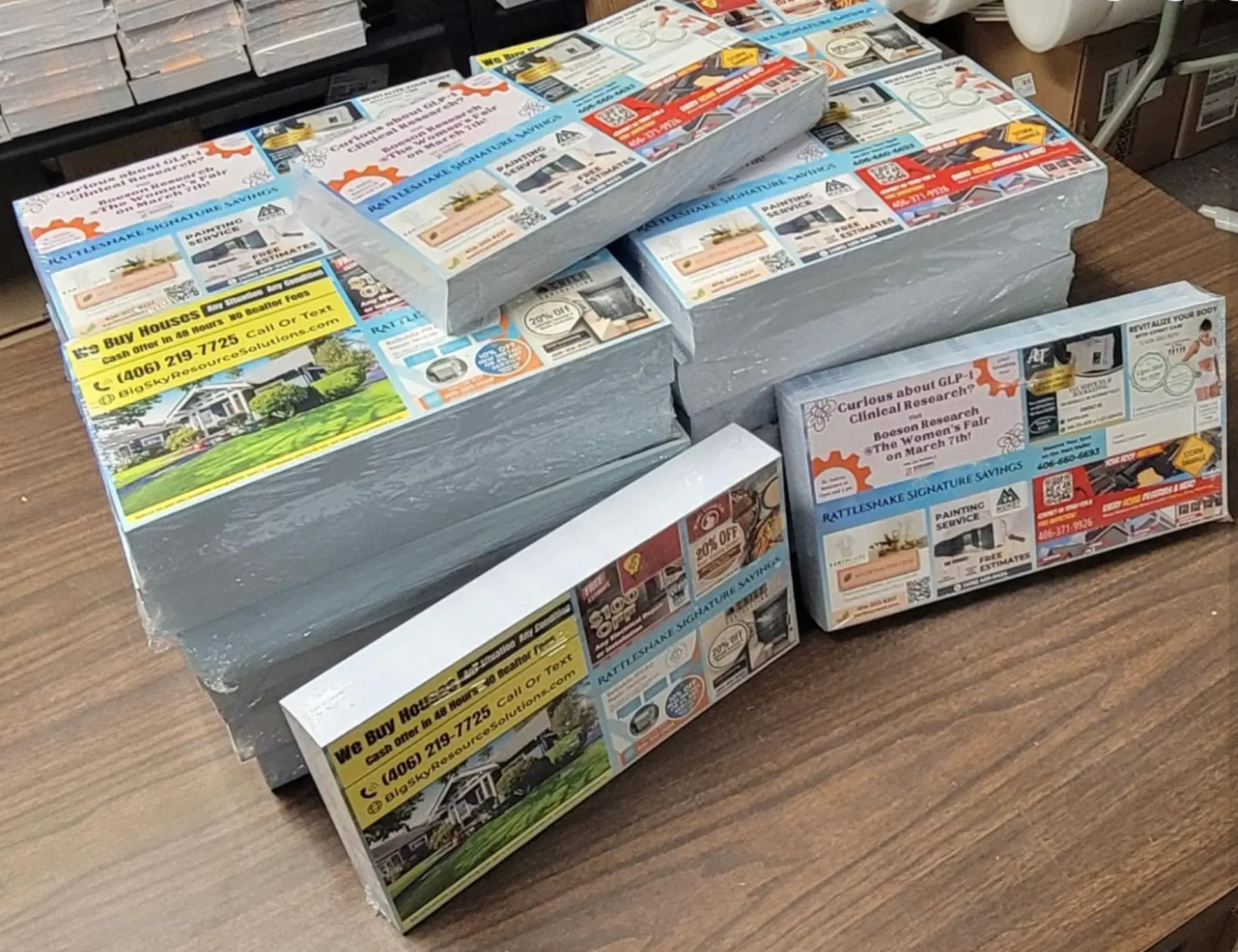
A punch card or digital program usually tracks a customer’s activity with one business. A community card puts multiple local businesses on one physical card or mailer. It can introduce your business to nearby households and give residents a reason to keep the card.
Community Cards uses a shared local format for businesses in and around Colorado Springs. Participating businesses receive a defined space for an offer, service, or promotion. The card is distributed to a targeted local area rather than being limited to existing customers.
You can see how shared cards create local context in How Shared Postcards Build Neighborhood Visibility.
Advantages
The main advantage is reach beyond your existing customer list.
A paper or digital loyalty program generally starts after someone has already visited. A community card can help you reach a nearby resident before their first visit.
The shared format also gives the offer context. A resident may keep a card because it includes several useful local businesses, not just one advertisement. That can make your business easier to remember when a relevant need appears.
Community cards may work well for:
- New businesses that need local awareness
- Service businesses with infrequent purchases
- Restaurants and shops seeking neighborhood traffic
- Businesses opening in a new area
- Seasonal offers and timely promotions
- Local businesses that want to support other independent operators
Community Cards also uses category exclusivity to keep the card clear. As explained in Why Category Exclusivity Matters, one business per category reduces direct duplication and gives each participating business a clearer position.
Limitations
A community card is not a replacement for every type of loyalty program.
It doesn’t function like a point-of-sale database. It won’t automatically track how many times a specific customer has visited or send an automated win-back message.
Results also depend on the offer, distribution area, design, and timing. Your message needs to be easy to scan. It should state what you do, where you serve, what the customer receives, and what they should do next.
Choose a community card program if:
- You need to reach nearby households
- Your business has a longer purchase cycle
- You want a local, tangible marketing format
- You’re launching or expanding in a Colorado Springs neighborhood
- You want to participate in a group of complementary local businesses
Quick comparison
| Program type | Best for | Main strength | Main limitation |
|---|---|---|---|
| Paper punch card | Cafes, bakeries, frequent-visit businesses | Low cost and easy to explain | Little customer data |
| Digital loyalty program | Businesses needing tracking and automation | Reporting and customer communication | More cost and administration |
| Community card program | Local reach and neighborhood awareness | Introduces your business to nearby households | Doesn’t replace POS-based tracking |
Which option fits your business?
Use these shortcuts to narrow your choice.
If you run a cafe or quick-service restaurant
Start with a paper or digital visit-based program. Customers should be able to understand the reward without asking several questions.
A simple structure may be more effective than a points system. Test the program for 60 to 90 days and track visits, redemptions, and average ticket size.
If you run a salon, gym, or appointment-based business
Use a program that supports rebooking, referrals, or milestones.
For example, you might reward a customer for booking their next appointment before leaving, completing a training package, or referring a new customer. A digital system may help if you need reminders and customer records.
If you run a retail shop
Consider a digital points program if purchases vary significantly in price. A points structure can reward higher spending without giving away the same item after every fixed number of visits.
A community card can support the digital program by reaching residents who have not visited yet.
If you run a service business
A community card may be more useful than a traditional punch card if customers only need your service a few times each year. Roofing, pressure washing, electrical, dental, and home maintenance businesses often need to build recognition before a customer is ready to buy.
You can use the card to promote a consultation, estimate, seasonal service, or first-visit offer.
How to launch without creating extra work
Keep the first version narrow.
- Choose one behavior. Decide whether you want more visits, larger purchases, rebookings, or new local inquiries.
- Create one clear reward. Avoid several tiers at launch.
- Set a realistic margin. The reward should encourage a future purchase without making the original sale unprofitable.
- Train staff with one explanation. If employees need a script longer than a sentence or two, simplify the program.
- Promote it at the right point. Mention it at checkout, on receipts, in your email list, and on your storefront.
- Review the results. Check enrollment, redemption, repeat visits, average transaction value, and customer feedback.
The practical answer
There isn’t one best customer loyalty program for every Colorado Springs business.
Choose a paper punch card if you need a low-cost program for frequent visits.
Choose a digital loyalty program if you need customer data, automated communication, or more detailed performance tracking.
Choose a community card program if your immediate need is reaching nearby households and building local awareness before the first visit.
You can also combine formats. For example, a restaurant might use a digital rewards program for existing customers and a community card to introduce the restaurant to residents in Flying Horse, Gleneagle, Rockrimmon, Monument, or Woodmoor.
Community Cards is one option for businesses that want a physical, neighborhood-focused way to promote a local offer. It is designed to complement your existing loyalty process, not require you to replace it.
If you’re comparing ways to reach more local customers, visit Community Cards to review the current shared-card opportunities and determine whether your business fits the next Colorado Springs distribution.